When Was The First Islamic Voyage to the Americas?
Shiver me timbers!

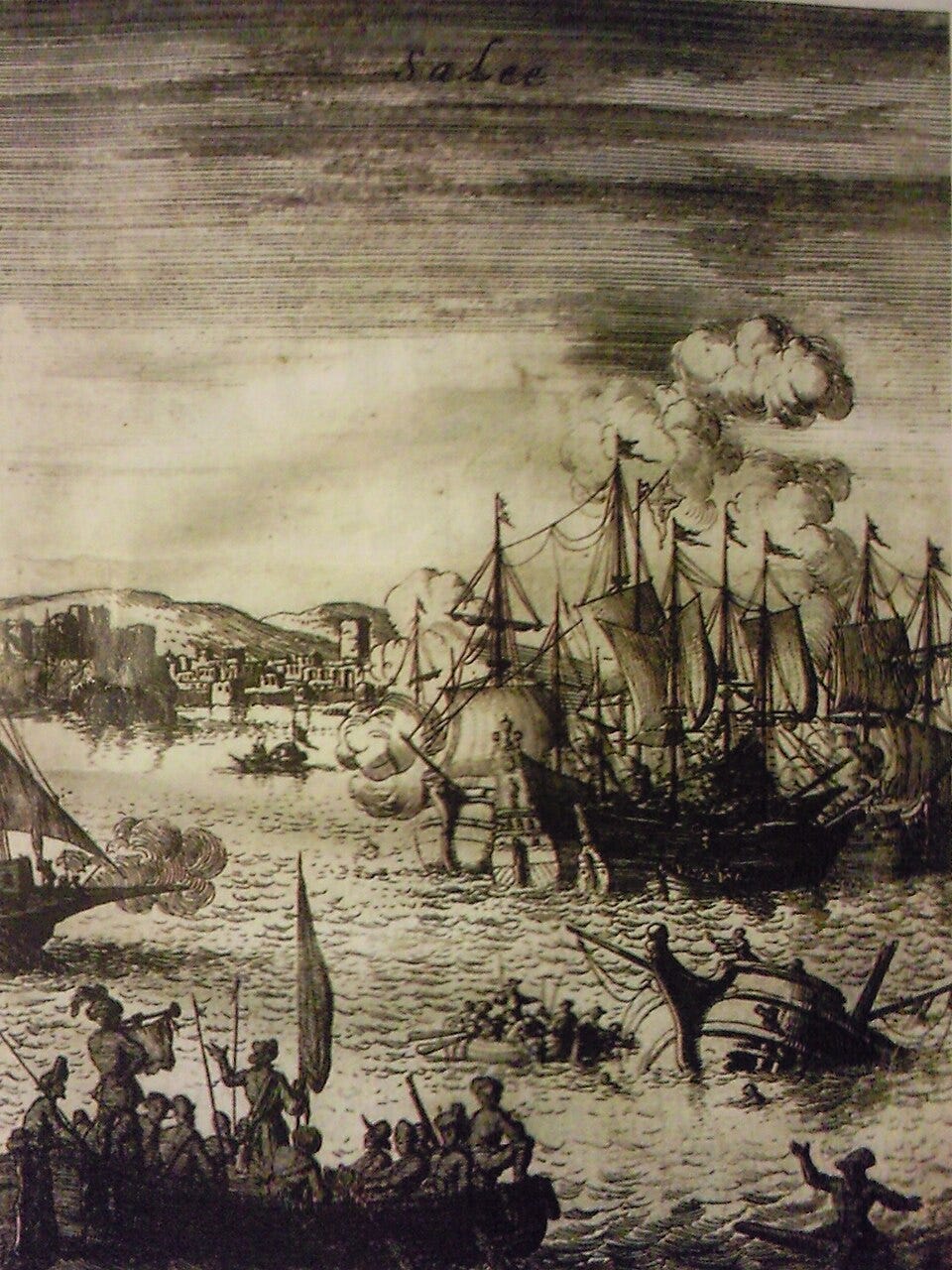

It’s impossible to know for certain when the first Muslims reached the New World. But highly dubious claims of pre-Columbian Muslim voyages into the western Atlantic notwithstanding, 1492 is a reasonable guess. At the time of Columbus’s voyages, the Reconquista had just finished and Spain possessed a sizeable Muslim population. Columbus brought with him almost a hundred men, making it possible, though unprovable, that at least a few were Moriscos who still adhered to Islamic practices. But if there weren’t, the first Muslims still arrived soon after. The emerging trans-Atlantic slave trade brought Senegambian Muslims to Spanish and Portuguese colonies in the Americas from the 1510s onward. And in 1528, an enslaved Moroccan named Estevanico landed in Florida with the ill-fated Narváez expedition, becoming the first person of Muslim origin (though he was converted to Christianity under pressure) on American soil we know by name.
However, these voyagers, both those who went voluntarily and those who did not, traveled via Christian expeditions. A more interesting question is when the first voyage, sailing under an Islamic banner, reached the New World. As far as I can tell, the answer is 1624–26. During those two years, a small flotilla of corsair ships from the Moroccan port of Salé and Algeria reached cod fishing grounds off Newfoundland and spent two years there preying upon French fishing fleets. This episode is recorded in a 1626 French missionary's chronicle and further corroborated by a stray English Privy Council entry six years later. Understanding how this happened, and why it didn't continue, requires a brief detour into the political peculiarities of early-17th-century Salé.
A Muslim Pirate Republic
During the early 1600s, Morocco’s ruling Saadian Dynasty found itself in chaos. After the death of their dynamic sultan, Ahmad al-Mansur, the country was plunged into a civil war that lasted over two decades. Into this tumultuous vacuum stepped a refugee community: The Hornacheros, several thousand Moriscos who had fled Extremadura in 1610 during Spain's mass expulsions. They settled near the town of Salé, and while nominally falling under Moroccan suzerainty, in practice they ran their own affairs.
Then in 1614, the Spanish captured the powerful pirate base at La Mamora, scattering its European (English and Dutch in particular) pirates, many of whom, like the Moriscos, settled around Salé. These freebooters brought with them square-rigged ship designs that, unlike the traditional Mediterranean galley, were designed to survive open Atlantic conditions.
By the early 1620s, the result was the ingredients for a formidable corsair enterprise: Morisco leadership, multinational renegade crews and ocean-capable European ship designs sailing under the Moroccan banner (despite effectively being independent). Salé corsairs would soon become infamous across northern Europe, participating in a 1627 raid of Iceland. But before this more notorious attack, in 1624, a small flotilla slipped quietly across the Atlantic.
To Newfoundland
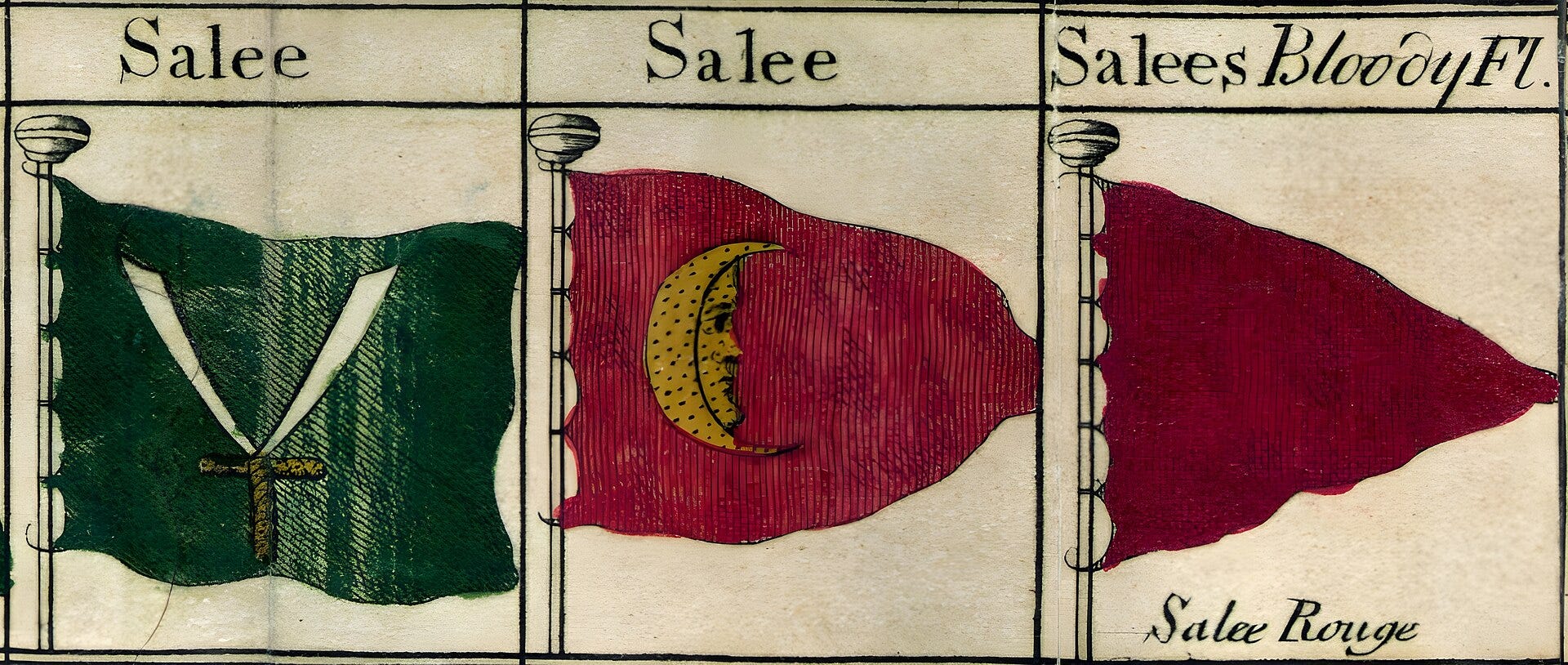

In 1626, a French missionary reported a strange and alarming development to his superiors in Paris. Over the previous two summers, a flotilla of Barbary corsairs, Salé and Algerian crews sailing together, numbering several dozen ships, had appeared on the great cod-fishing banks off Newfoundland, more than two thousand miles from their home ports. They were not raiding coastlines; the fishing banks off the coast themselves were the target. Working the fishing grounds, they captured or sank more than forty French vessels.
In part, the voyage was made possible because Salé ran on captives. Kidnapped French sailors were forced to take part in these attacks against their fellow countrymen. If you search for this episode online, you may encounter a more dramatic version: In 1624, Salé corsairs raided the coast of Acadia, modern-day Nova Scotia. Wikipedia repeats this claim in its article on the Republic of Salé and several popular histories follow. But this story is unlikely. The Acadian element enters the historical record as an unsourced parenthetical in Roger Coindreau's 1948 monograph Les Corsaires de Salé, where Coindreau adds “and on the coasts of Acadia”. But as far as I can tell, there were no landings. No primary sources (that I could find) corroborate Coindreau. But there was intensive fishing fleet predation, lasting multiple years, off the coast of Newfoundland.
Two Summers and No More
Despite long menacing the eastern and occasionally mid-Atlantic, corsair Muslim pirates almost never made their way to the Americas. The Newfoundland attack was a rare and brief exception. Within two years, the attacks ceased and, as far as I can tell, were never attempted again. In 1632, the English Privy Council noted in passing that “the Turks have not visited those coasts for six or eight years.” (At this time, “Turk” was often used as a generic term for Muslims.) A few years later, Father Pierre Dan, a French friar who had previously led a ransom mission to Salé, published his comprehensive Histoire de Barbarie. It covers the corsairs' European and Mediterranean campaigns in detail, but does not mention Newfoundland.
What happened was straightforward. For one, French naval ships began escorting fishing fleets to the Newfoundland Banks. Second, it is likely that the corsairs themselves made a calculation: They shifted their operations back to the eastern Atlantic, where they could intercept the same Newfoundland and Caribbean-bound shipping while remaining closer to home, primarily stalking the waters off the Azores, the Canaries, and the European coast. North African pirates would remain a threat to the colonies in the New World but by attacking supply lines rather than making the complete journey themselves. Finally, Salé lost autonomy, falling back under direct Moroccan control by 1668.
A Forgotten Grand Plan
Salé’s 1624 voyage was the small, opportunistic version of a much grander Moroccan ambition. A generation earlier, at the beginning of the 17th century, the Saadian sultan Ahmad al-Mansur (the same sultan whose death triggered Morocco’s civil war) and Queen Elizabeth I contemplated a joint Anglo-Moroccan project to conquer Spain's New World possessions outright. This plan, sketched in a remarkable series of letters between Marrakesh and London, envisioned a combined fleet seizing the Spanish Indies, with Morocco potentially settling the lands with its expelled Moriscos. The two crowns were to share both the cost of this undertaking and the spoils. While modern historians disagree regarding the seriousness of this proposal, it hints at a lost future where Morocco perhaps could have been far more involved in the colonization of the New World. Instead, the first Islamic voyage to the Americas, when it finally arrived, consisted of a few pirate ships sailing across the Atlantic to attack cod fishers. Two summers, and then gone.
Books and articles
Brotton, Jerry. The Sultan and the Queen: The Untold Story of Elizabeth and Islam. New York: Viking, 2016.
Coindreau, Roger. Les Corsaires de Salé. Paris: Société d’éditions géographiques, maritimes et coloniales, 1948. Reprinted Rabat: La Croisée des Chemins, 2006.
García-Arenal, Mercedes. Ahmad al-Mansur: The Beginnings of Modern Morocco. Oxford: Oneworld, 2009.
Primary sources
Dan, François Pierre. Histoire de Barbarie et de ses corsaires, des royaumes et des villes d’Alger, de Tunis, de Salé et de Tripoly. Paris: Pierre Rocolet, 1637.
de Castries, Henry, ed. Les Sources inédites de l’histoire du Maroc, 1ère série, France, Tome III. Paris: Ernest Leroux, 1911. (contains the 1626 report of Père François d’Angers and the 1626 memorandum of Isaac de Razilly)
Sainsbury, W. Noel, ed. Calendar of State Papers, Colonial Series, Vol. 1: 1574–1660. London: Longman, Green, Longman & Roberts, 1860.
Online sources
Wikipedia. “Republic of Salé.” https://en.wikipedia.org/wiki/Republic_of_Sal%C3%A9
I remember one time I met a Moroccan man proudly telling me that his country was the first to recognize America diplomatically as a gesture of friendship. And I was thinking later like... wait... weren't they also one of the Barbary States ? What an interesting place.