No One Knows About Moons
But They're Interesting

It’s day 29 of 30 for Inkhaven, and I’m officially done with history posts until after my residency concludes. I’ve effectively run out of topics that I have both the energy to write about right now and the background knowledge to cover accurately in a single day. I’ll continue work on my Industrial Revolution series after Inkhaven ends.
There are two subjects that I’d consider myself quite knowledgeable about. One of them is history and the other astronomy. But in practice I find myself talking about history far more in conversation than astronomy. And for good reason, I’ve found that people typically have much better baseline knowledge of history than astronomy and history is more interpersonal. The stories are grounded in human psychology and the familiar material conditions of the world we call home. But astronomy is cool. And there is perhaps no subdiscipline within astronomy more overlooked than the moons of our solar system.
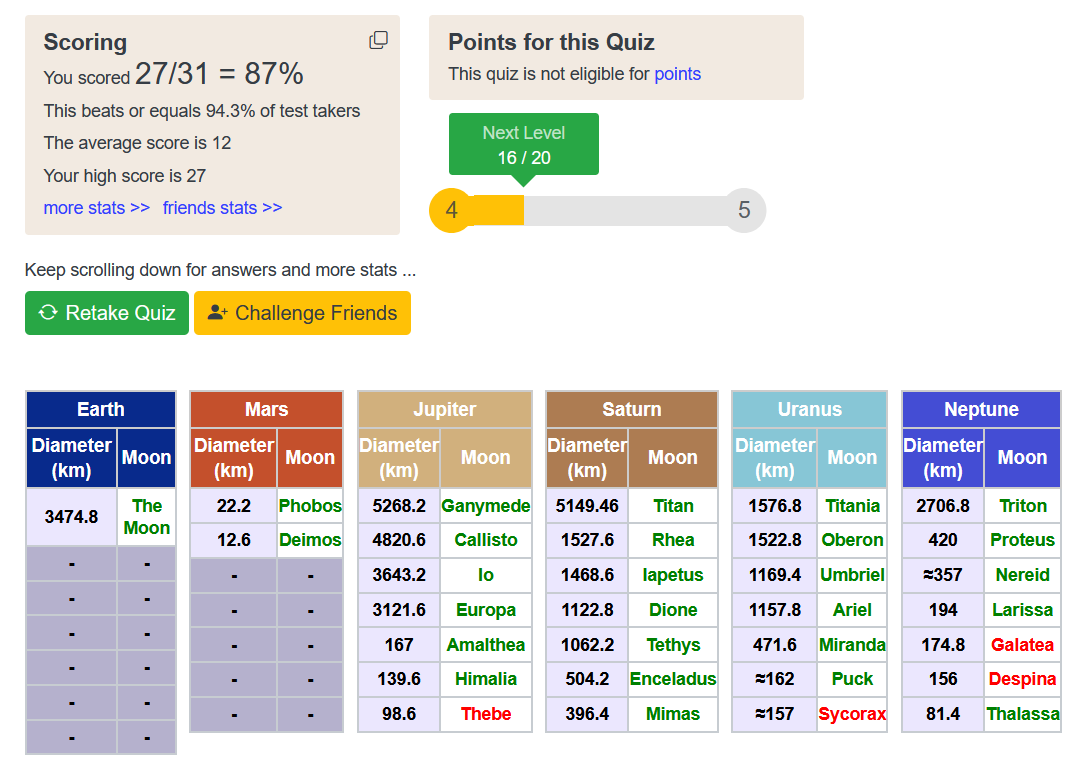
Almost no one, even people who are otherwise highly educated and knowledgeable seem to be aware of more than a handful of these worlds. And even if they know the names, that’s as far as their knowledge goes. While there are hundreds of tiny moonlets that are little more than rubble piles, many of the larger moons are quite fascinating and geologically active. In fact, they’re probably the most interesting bodies in our solar system aside from Earth herself. So I’m gonna try to sell you on these far-flung worlds by providing a short tour through a few of the most interesting moons.
Titan
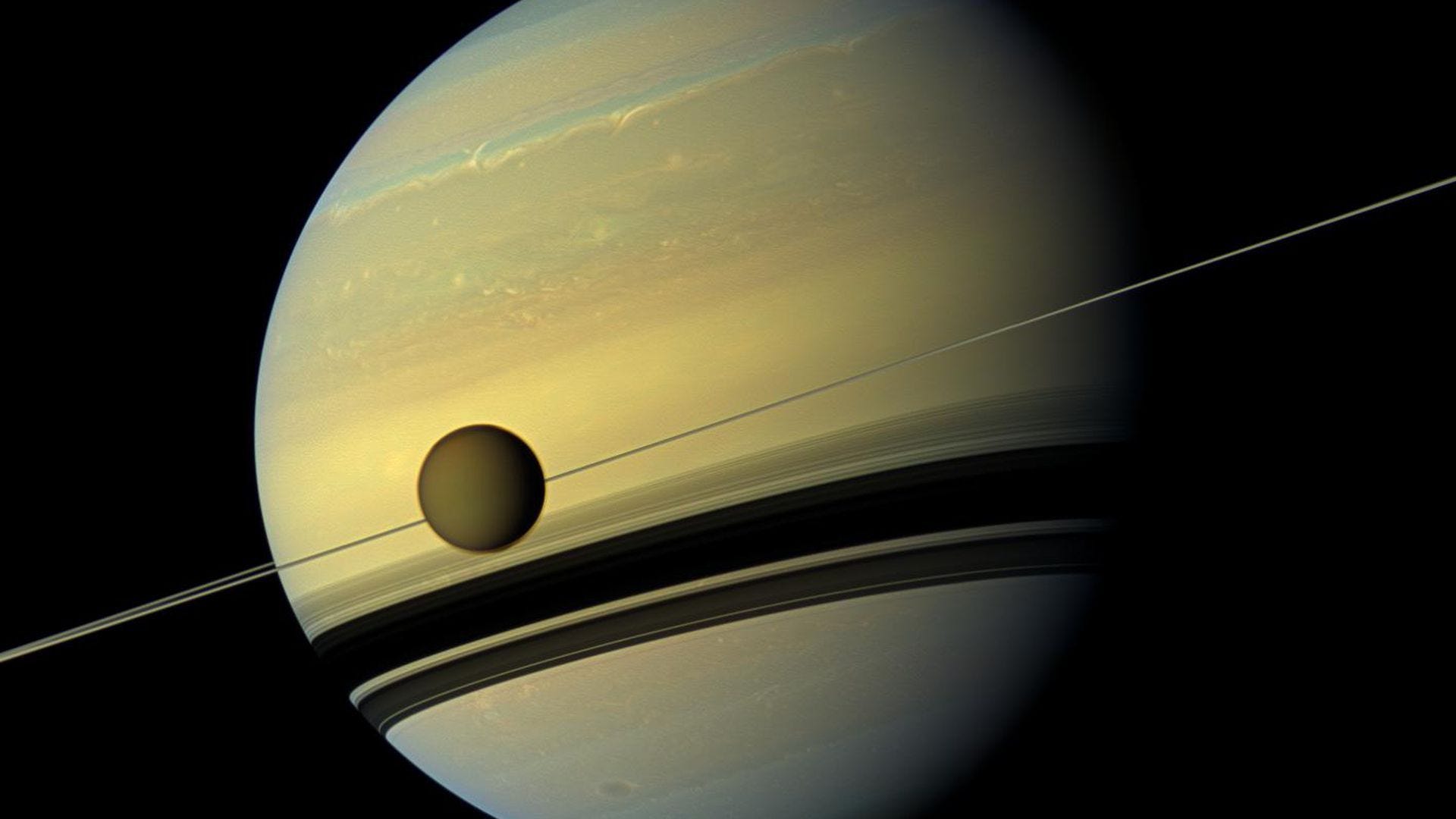
Titan is famous enough that most people are at least familiar with the name. It’s Saturn’s largest moon and the second largest in the solar system. At a distance, it may not appear very interesting; smooth and featureless thanks to its yellow atmosphere. But Titan’s atmosphere itself is unique. It’s the only moon with a substantial atmosphere. In fact, its atmosphere is so thick that the surface pressure is about 50% higher than Earth’s.
What’s beneath this atmosphere is also remarkable. It’s the only place in the solar system, aside from Earth, known to have an active “hydrological” cycle on its surface. Titan has lakes, rivers, rain, perhaps even waterfalls. Not composed of water but instead liquid hydrocarbons like methane and ethane. Methane rain. While the unbelievably cold temperatures on Titan’s surface (-290°F or -179°C) and alien atmospheric composition preclude the existence of any Earth-like life, who knows what secrets lie hidden beneath the waves of Titan’s lakes. Due to its exceptionally thick atmosphere and weak gravity, in theory it would be possible to fly on Titan by wearing a pair of wings and beating your arms like a bird, assuming you don’t freeze and suffocate first.
Europa
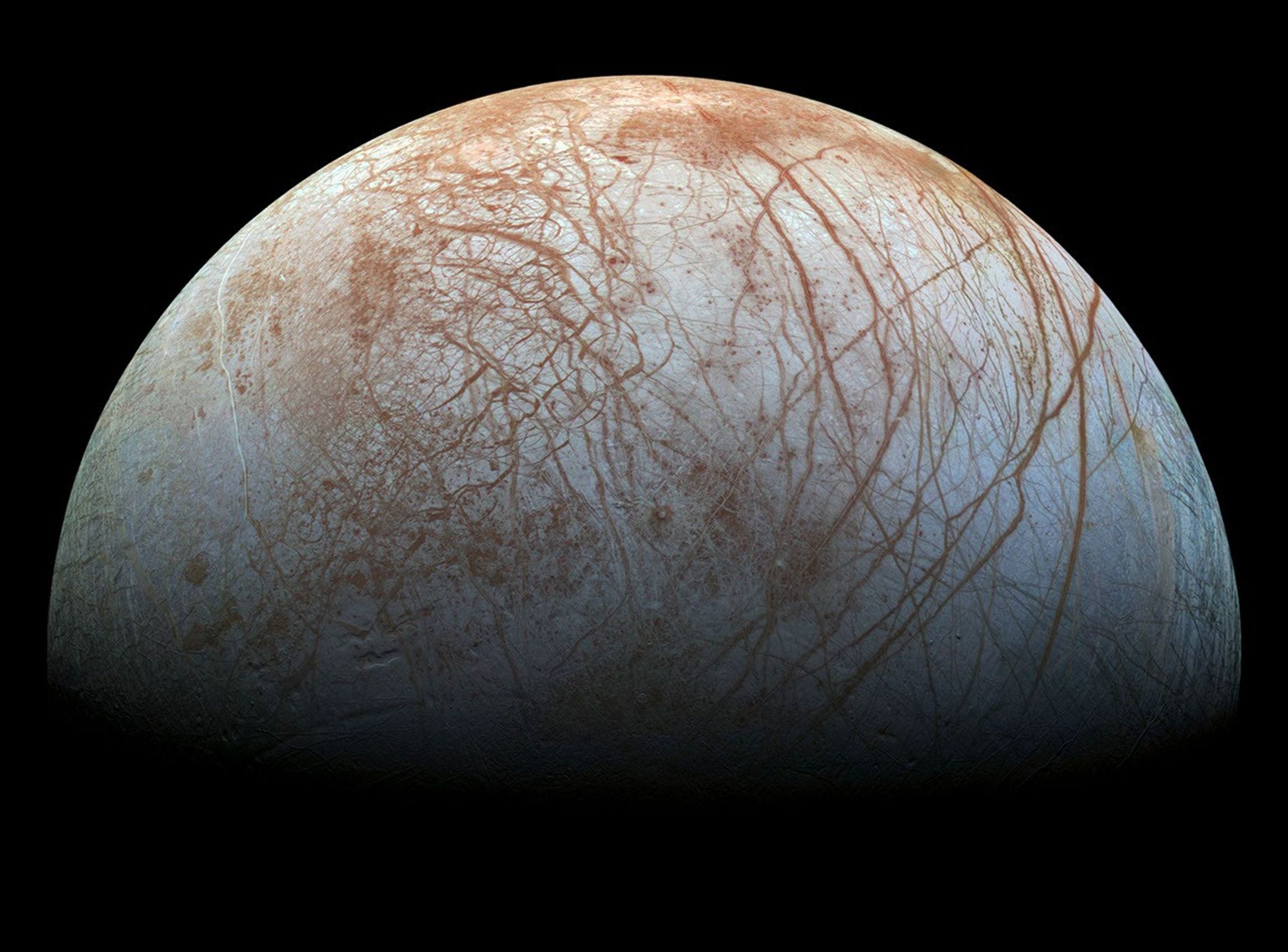
Europa is the fourth largest moon of Jupiter. It’s roughly comparable in size with our Moon and its surface is a sparkly shell of water ice. But what lurks beneath this frozen crust is what interests astronomers. Thanks to tidal forces, caused by a tug-o-war game between Jupiter and the other Jovian moons, Europa is stretched and squeezed, warming the world’s interior. Because of this effect, its likely to possess a massive liquid ocean beneath its surface. This global mega-ocean may contain as much as three times as much water as all the Earth’s oceans.
Beneath the surface of this snowball may be liquid water, chemistry, and an energy source, all sealed beneath a shell of ice. This is why Europa has become one of the classic candidates in the search for extraterrestrial life. Probably not complex eukaryotic life. But microbes? Weird extremophiles? Something living around hydrothermal vents at the bottom of an ocean that has never seen the Sun? That is at least within the realm of serious scientific speculation.
Enceladus
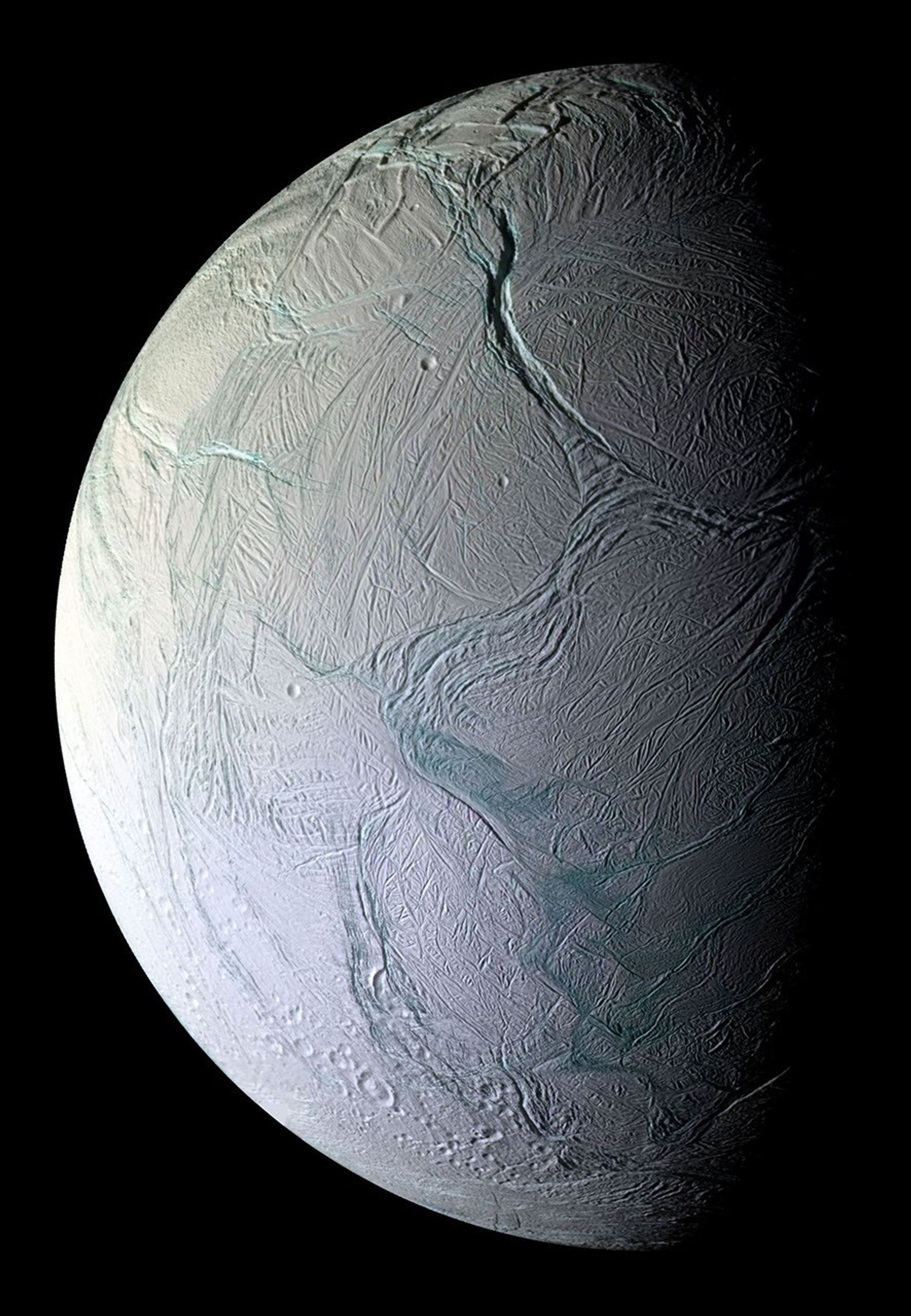
Enceladus is very obscure. I know so because each time I write out Enceladus, a red squiggle appears beneath the name asking if I mean “Enchiladas”. Tasty though they may be, the flavor profile of the enchilada pales in comparison to the natural beauty of Saturn’s sixth largest moon. Like Europa, Enceladus is another icy world expected to harbor a vast subsurface ocean. But from a scientific perspective, this moon has a key advantage for research. While Europa’s oceans are thought to be locked deep below its frozen shell, Enceladus is actively leaking. This small moon of Saturn is only about 310 miles wide, yet it shoots plumes of water vapor and ice particles into space from long fractures near its south pole known as “tiger stripes.”
This makes Enceladus perhaps the most conveniently inspectable ocean world in the solar system after our own. Unlike Europa, in the case of Enceladus, nature has drilled the hole for us. NASA’s Cassini spacecraft flew through these plumes and found water vapor, icy grains, salts, and organic compounds. That does not mean life exists there, but it does mean that one of the most fascinating, potentially habitable environments in the solar system is being blasted into space for easy future sampling.